
Rediscovering Holiday Magic, Powered By Technology

The Origin
From the first silent films ever made to the major motion pictures of today, movies have stood the test of time, giving themselves their own vintage pedigree worth hours of exploration. For over a century, we have used movies to escape reality, expand our imagination, and broaden our worldview. While this is all still true today, with the on-demand expectation of our modern world, the concept of waiting and planning a day to go to a movie theater has become practically obsolete to younger generations. Today, whether you’re 10 years old or 100 years old, you have almost 150 years' worth of enticing cinema and video content at your disposal, all jam-packed into various streaming services and other media platforms.
Something you should know about me is that my passion for most of my adult life has been rediscovering vintage technology and reimagining it through a modern lens. This hobby is what inspired the Vintage Bytes blog and has driven me to share my discoveries with you all. For the purpose of this first piece, we’re looking at the 1973 Fisher-Price Movie-Viewer.
When I was a boy, the concept of “on-demand” and personal video creation was only in its infancy, and certainly free from those coined terms. Of course, 8mm cameras and other video recorders were on the market; these instantaneous recording devices were a luxury. Growing up with limited access to those luxuries, I took what I could get. My Fisher-Price Movie Viewer allowed me to play short, silent, looped clips from their provided cassette tapes. Even if it was pretend, I had the freedom to watch different films when I wanted, and as many times as I could - in other words, I loved every second of it. Without knowing it at the time, this small toy would influence an entire generation and set the tone for our love of immediate media consumption today.
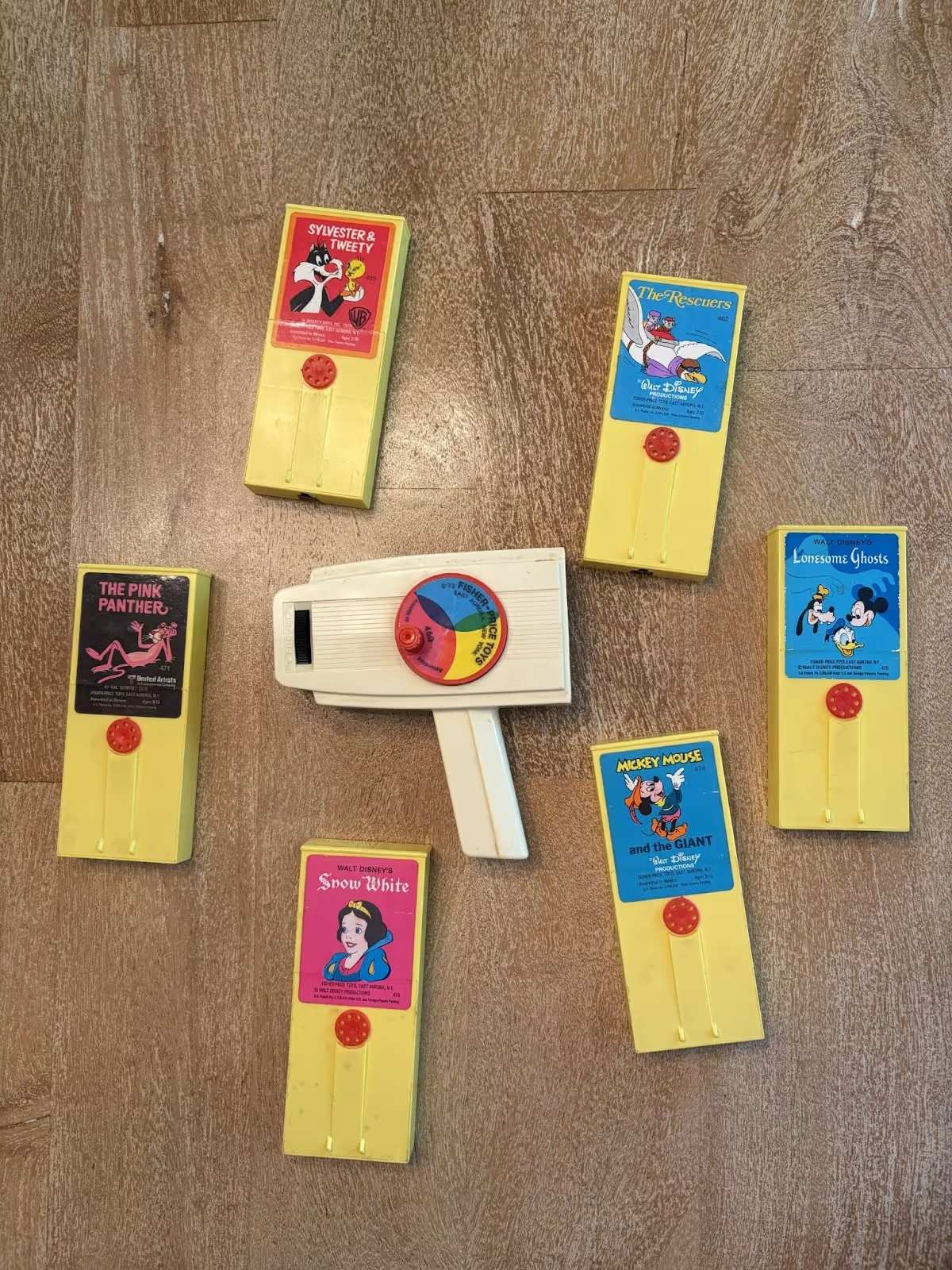
Reflecting on my early introduction to technology made me wonder: How many other “wow” moments surrounding technology have transformed the way we see the world? And with endless information now just a tap away, how do we pass that feeling of discovery on to future generations? I believe the answer is simpler than we think – what better way to inspire curiosity and create new passions than during the most ‘wonder-full’ time of the year…
You will learn this about me sooner or later: my love for the holidays is right in tow with my love for technology. As a builder, whether it be Halloween or Christmas, the holiday season can offer limitless possibilities for creativity and decoration. Similar to the on-demand nature of video content today, the mass production of decorations has made shopping easier, but has killed the creative, home-made spirit. Other than varying effort, there’s very little that makes each house unique, and for the most part, it remains stagnant from year to year. Sure, this can bring familiarity to the neighborhood – a sense of comfort from the waving Santa Claus statue or the blow-up snowglobe, but there is a universal flaw. They are stuck in a loop, only able to play the same content over and over…and over again.
I believe we are capable of, and deserving of, something more.
In a world accustomed to on-demand experiences, I wondered: What if our audience could choose the holiday decorations they wanted to see, in real time?
The Evolution of The Build
In 2023, the concept for the interactive holiday theater for my family’s home holiday display was born – inspired by the joy and simplicity of that Fisher-Price toy camera, and the agency it gave young users. Even if it was only make-believe.
While the concepts have evolved over the years, the main components are relatively simple:
- A custom-built outdoor kiosk.
- 15 arcade-style buttons associated with different video clips or effects.
- One very large 85” TV in a custom weatherproof enclosure, appropriately decorated for the season.
- (Optional) Coordinated Light Display
The Result?
- Push one button, and the associated holiday video and sound effects will instantly play.
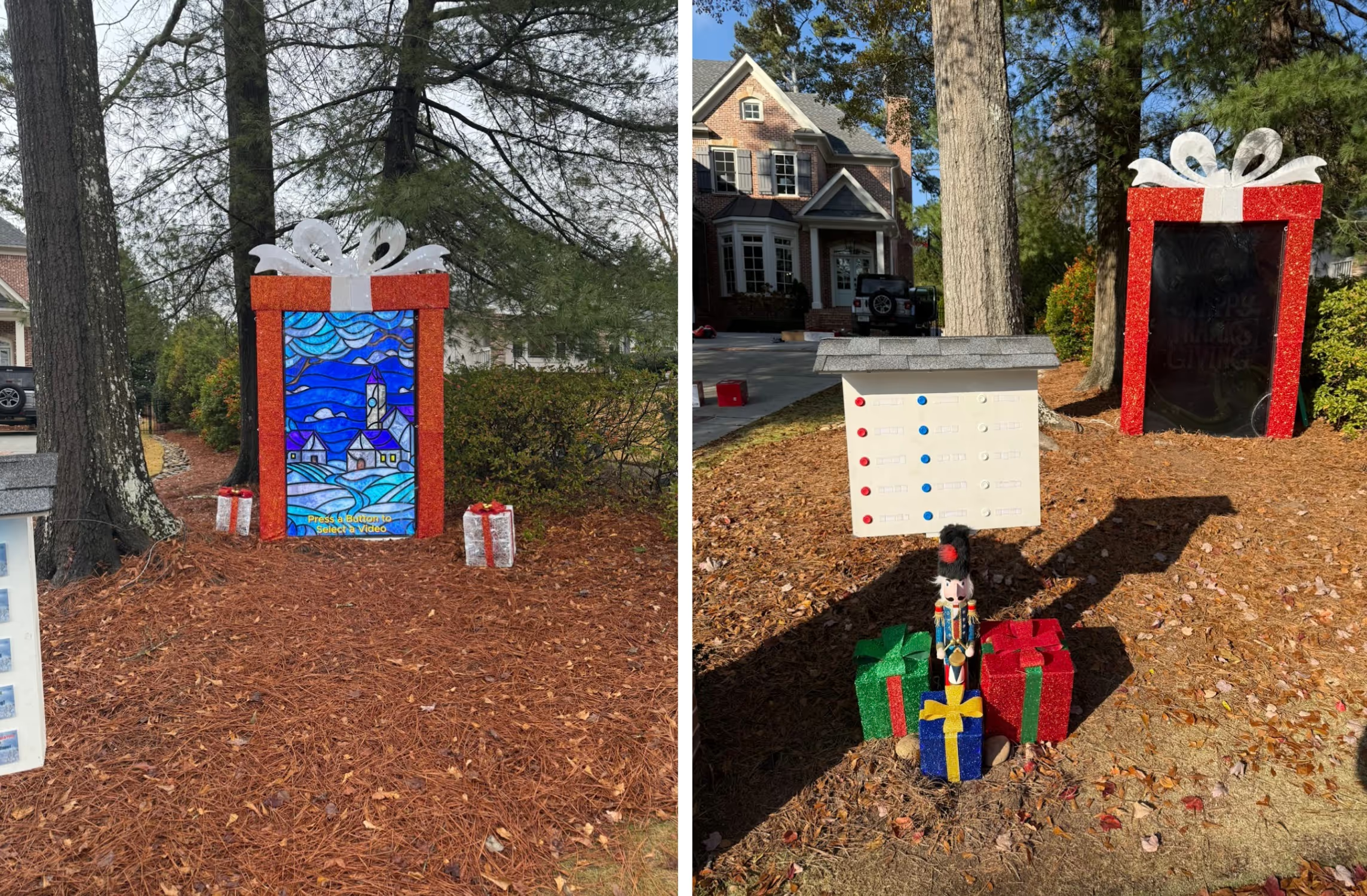
In the first year of planning, I focused primarily on the interactive standard kiosk – the core feature that allows our visitors to control their own experience. The kiosk was originally hooked up to a projector with a holiday-decorated projector screen, which while great at night, was completely unusable during the day.
In 2024, I learned from my lessons and replaced the projection screen with an 85” TV. To keep it safe from the elements, the custom kiosk was retrofitted with basic weatherproofing, TILT protection, and, on a less fun note, theft protection.
The Technicalities
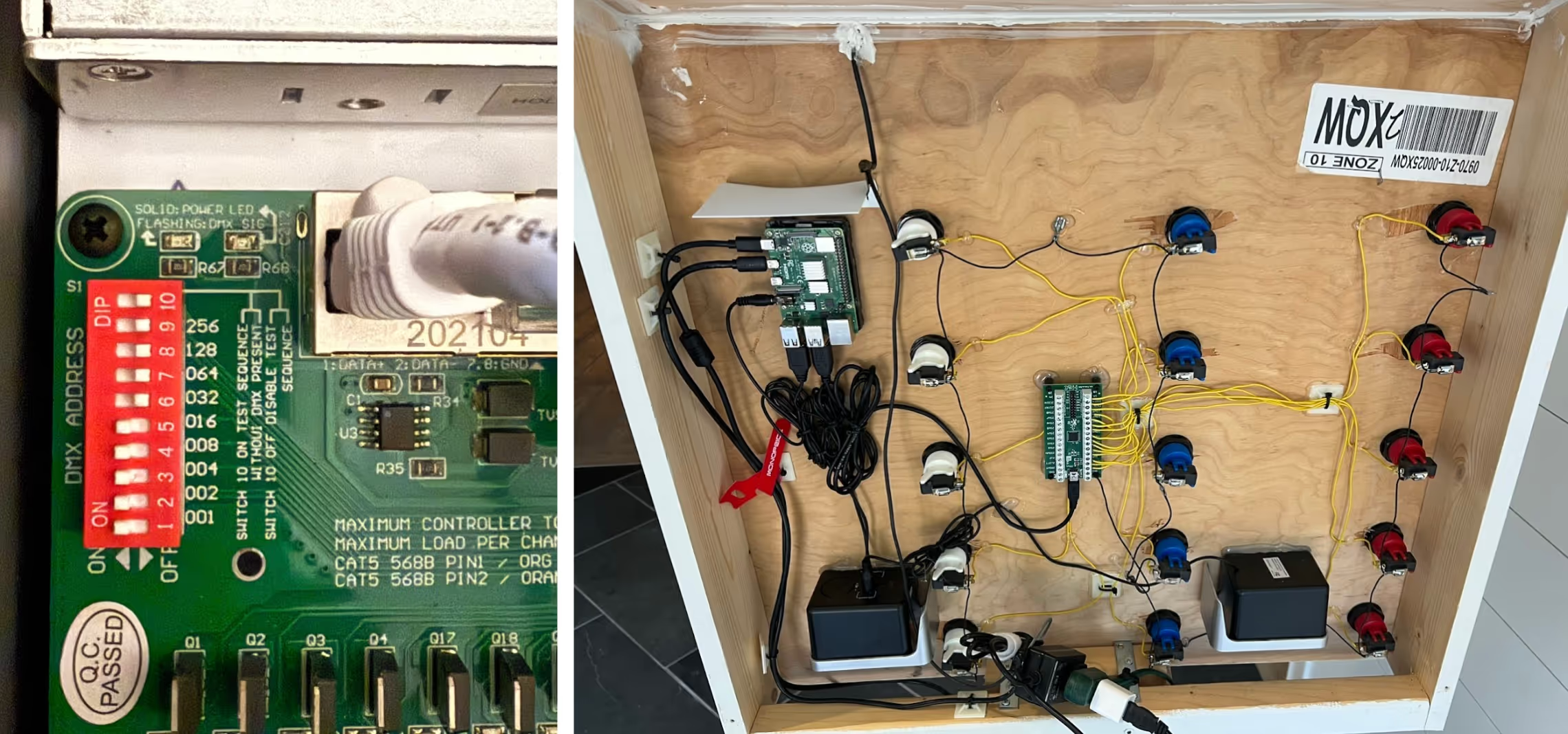
The kiosk features 15 arcade-style buttons to allow a simple and familiar mechanism for selecting content. Inside the enclosure is the brain of the entire system – a single Raspberry Pi computer. This tool is a full-featured, single-board computer - a powerful, user-friendly, and relatively inexpensive computer system. Connected to that computer system is a special device that Raspberry Pi recognizes as a keyboard, even though it certainly is not.
The trick: Each one of the arcade buttons is wired to the “keyboard’ device and has a letter-organized video system. When a button is pushed, the device sends a certain “key stroke” to the Raspberry Pi, and the video will play.
For example, the first button on the board is associated with the letter “A”. When it’s pushed, the device will sense this action and send the “A” key to the Pi system - similar to if a user typed “A” on a keyboard. The custom program running on the Pi system then reads the “A” key and plays the associated video.
While the programming of this is slightly more complicated, I will explore this and the additional light display in more detail in future blogs.
For each button, I created laminated cards that show what will be played when pressed, and can be switched out periodically for each holiday. Of course, there could be more than 15 buttons, but there is some magic in having a limited number of content to choose from. By only allowing the user to view a limited amount of the content, the excitement of what you’ll see is restored when the video clips are periodically switched out.
On a much more pragmatic level, this display has been a HUGE hit with kids, often creating a long line of regulars and new faces waiting to press the varying buttons. I have found that limiting the content keeps the line moving and maintains good tidings with my neighbors.
More to Come...
As we move through the holiday season, I will soon be posting updates to this series for my fellow tech-enthusiasts, sharing more in-depth knowledge of how it was built, what the programming is, and the build of the coordinated light display in action. For parents, I’ll also be breaking down a scaled-down version of this display to share with their kids to learn. It may be daunting at first glance, but I believe by the end that your kids will be happily surprised at their abilities and what they can do using technology.
The holiday theatre is only grazing the surface of what can be inspired through technology. There is so much ahead to explore – Vintage Bytes seeks to uncover how yesterday’s innovations shape today’s world, and how they can inspire the future. My mission is very simple: bridge the gap between old-school tech and cutting-edge innovation to empower minds of all ages to discover that with technology, the world is accessible and knowable.
I’m excited you’re here, and I look forward to sharing this journey of discovery with you.
Happy Holidays!